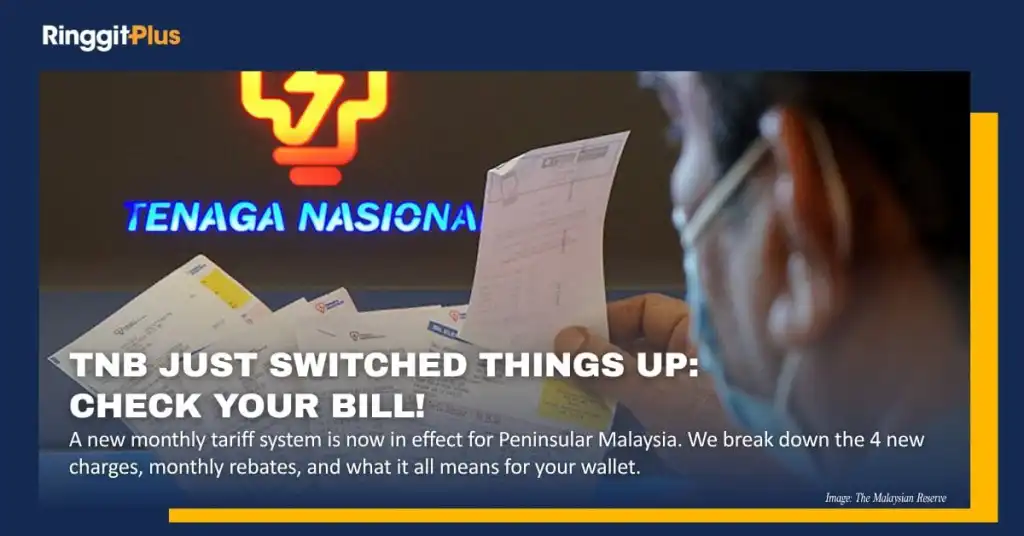
As of 1 July 2025, your electricity bill is now calculated differently. A new system called the Automatic Fuel Adjustment (AFA) now adjusts your tariff every month based on global fuel prices. This replaces the previous Imbalance Cost Pass-Through (ICPT) mechanism, which reviewed fuel costs every six months under the Incentive-Based Regulation (IBR) framework.
So what does this mean for your monthly bill? Some people will see small savings, while others might pay a bit more. Here’s a breakdown of what’s changed, why it happened, and how you can manage your electricity costs going forward.
Why Your Electricity Tariff Was Revised
This tariff revision is a key part of Malaysia’s energy reform under the National Energy Transition Roadmap (NETR). The goal is to move towards carbon neutrality by 2050. Several important changes have been introduced to support this goal.
The base tariff, set and regulated by Malaysia’s Energy Commission (Suruhanjaya Tenaga), has been adjusted to 45.40 sen per kWh. This is an increase from the previous 39.95 sen per kWh but slightly below the earlier approved rate of 45.62 sen per kWh. The Energy Commission’s independent oversight ensures fair and transparent pricing aligned with national energy policies and protects consumers from sudden or unjustified price hikes.
Energy charges have been simplified from five progressive tiers into two tiers. The first 1,500 kWh is charged at 27.03 sen per kWh while consumption beyond that is billed at 37.03 sen per kWh.
The new Automatic Fuel Adjustment (AFA) system allows tariffs to better reflect real-time fuel costs, providing rebates when global prices fall and adding surcharges when prices rise. To prevent sudden jumps, these monthly changes are capped at ±3 sen per kWh. A rebate of around -1.45 sen/kWh was announced for August 2025 for customers using over 600 kWh, with forecasts suggesting more rebates may follow in the coming months. If your usage is 600 kWh or less per month, you are protected from any AFA surcharge.
Rising electricity demand and the fluctuating supply from renewable energy sources like solar require modernisation of the national grid. The tariff structure supports these necessary upgrades, helping integrate more renewable energy and making Malaysia’s electricity supply greener and more reliable.
To promote energy efficiency and protect low-usage households, the government has phased out blanket subsidies and introduced targeted support. For example, households consuming 600 kWh or less per month now enjoy a waiver of the RM10 retail charge. This change aims to help lower-income or low-usage consumers manage their electricity costs more effectively.
Programmes like the Energy Efficiency Incentive (EEI) and Time-of-Use (ToU) tariffs give Malaysians tools to better control their electricity consumption and save money by using power during off-peak hours.
Breaking Down Your New Bill
Charge Component
Rate
Details
Energy Charge
27.03 sen/kWh
First 1,500 kWh/month
37.03 sen/kWh
Above 1,500 kWh/month
Capacity Charge
4.55 sen/kWh
Applied to all electricity consumed
Network Charge
12.85 sen/kWh
Applied to all electricity consumed
Retail Charge
RM10/month
Fixed fee, waived if monthly usage ≤ 600 kWh
Your monthly electricity bill now consists of four parts: Energy, Capacity, Network, and Retail charges.
Energy Charge: This is the cost of the electricity you actually use. It’s tiered: the first 1,500 kWh you use costs 27.03 sen/kWh, and any usage above that is 37.03 sen/kWh.
Capacity & Network Charges: Think of these as infrastructure costs. The Capacity Charge (4.55 sen/kWh) helps maintain power plant reserves, while the Network Charge (12.85 sen/kWh) covers the cost of maintaining the national grid that delivers power to your home. These are applied to all electricity consumed.
Retail Charge: This is a fixed RM10 per month fee for services like meter reading and billing. Good news: This fee is completely waived if your monthly usage is 600 kWh or less, which protects lower-income households.
How the New Tariff Affects Your Monthly Bill
Monthly Consumption (kWh)
Old Tariff (RM)
New Tariff (RM)
Difference (RM)
300
71.00
65.79
-5.21
600
219.80
215.98
-3.82
900
408.70
418.35
+9.65
1,200
593.71
573.82
-19.89
1,500
778.71
719.90
-58.81
2,000
1,298.25
1,177.78
-120.47
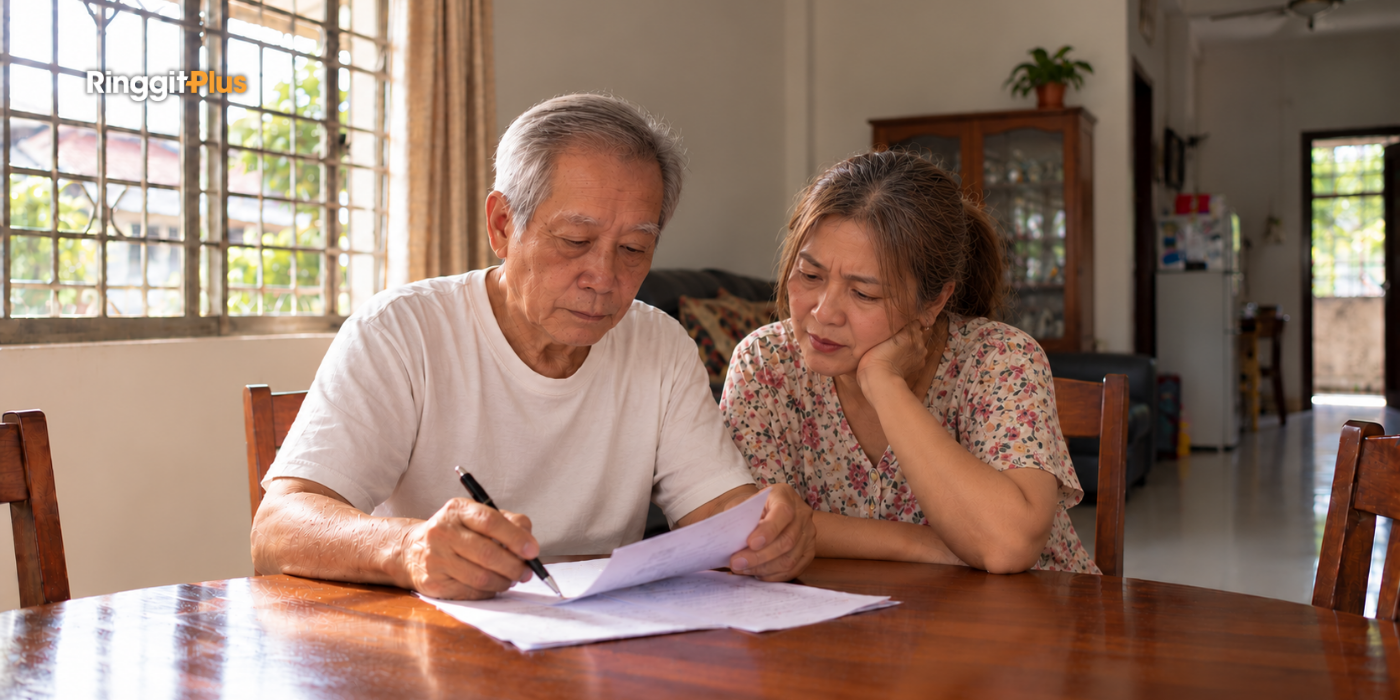
So, are you better or worse off? It depends entirely on your usage.
Low Users (e.g., 300-600 kWh/month): You will likely see a small reduction in your bill. For example, a household using 300 kWh will save about RM5 per month. Those at 600 kWh save nearly RM4. This is ideal for young professionals or smaller families conscious of their energy use.
Mid-Level Users (e.g., around 900 kWh/month): You might see a slight increase. A household using 900 kWh could see their bill go up by about RM10. This is the group that needs to be most aware of the new incentives.
High Users (e.g., 1,200 kWh+/month): You stand to benefit the most. Because the new structure removes steep progressive tiers, a family using 1,500 kWh (perhaps running multiple air-conditioners and appliances for their children) could save almost RM60 a month. At 2,000 kWh, the savings could be over RM120.
Smart Ways to Lower Your Bill: Energy Efficiency Incentive (EEI) and Time-of-Use (ToU) Explained
The new system isn’t just about new charges; it’s about new ways to save. Here are two tools at your disposal.
1. Energy Efficiency Incentive (EEI)
Monthly Usage (kWh)
EEI Rebate (sen/kWh)
1 – 200
-25.0
201 – 250
-24.5
251 – 300
-22.5
301 – 350
-21.0
351 – 400
-17.0
401 – 450
-14.5
451 – 500
-12.0
501 – 550
-10.5
551 – 600
-9.0
601 – 650
-7.5
651 – 700
-5.5
701 – 750
-4.5
751 – 800
-4.0
801 – 850
-2.5
851 – 900
-1.0
901 – 1,000
-0.5
This is a direct rebate for being energy-efficient. If you use 1,000 kWh or less per month, you get a rebate on a sliding scale. The less you use, the bigger the rebate. For instance, households using just 200 kWh get a big 25 sen/kWh rebate.The EEI rebate is applied automatically based on your monthly usage, so there’s no need to apply. This incentive is designed to help you offset any potential cost increases and reward you for conserving energy.
2. Time-of-Use (ToU) Tariff
Usage Tier
Standard Rate (sen/kWh)
ToU Peak Rate (sen/kWh)
ToU Off-Peak Rate (sen/kWh)
Up to 1,500 kWh
27.03
28.52
24.43
Above 1,500 kWh
37.03
38.52
34.43
This is for households that can be flexible with their electricity usage. By opting into the ToU tariff, you get charged different rates depending on the time of day.
Off-Peak Hours (10:00 PM to 2:00 PM, plus all day on weekends): Electricity is cheaper than the standard rate.
Peak Hours (2:00 PM to 10:00 PM, weekdays): Electricity is slightly more expensive.
If you can shift your heavy appliance usage such as washing machines, dryers or charging your electric vehicle to off-peak hours, you could see meaningful savings on your electricity bill. It can be quite leceh to change habits, but the savings can be significant. You can apply for the ToU tariff via the myTNB portal.
More Control Over Your Costs
The new electricity tariff gives you a clearer picture of where your money is going and more control over your monthly bill. By understanding the new components, you can manage your energy costs effectively.
In addition to these tariff changes, the government continues to provide targeted support for vulnerable and low-income households. If you need extra help managing your electricity costs, be sure to contact TNB customer service to learn about available support options.
For more money-saving tips, follow RinggitPlus on our official WhatsApp channel.
Samuel writes about personal finance and financial news, focusing on how banking updates, policies, and promotions affect everyday money decisions. He enjoys making complicated financial topics easier to follow. Outside of writing, he spends his time watching TV shows and occasionally convincing himself he will only watch one episode.
Samuel writes about personal finance and financial news, focusing on how banking updates, policies, and promotions affect everyday money decisions. He enjoys making complicated financial topics easier to follow. Outside of writing, he spends his time watching TV shows and occasionally convincing himself he will only watch one episode.
I think you should highlight the tariff for the network charge and the capacity charge .This is the costs that apparently causing the hike of the electricity bill.How can you justify the tariffs ie RM/kWh ? The tariff comparison being shown in the table does not really shows the benefit at all because the network and capacity charge are being separated .If all utility company like the water authority are using the same structure, then what do you expect ? This is just a political ploy to avoid the public from seeing enormous hikes in the tariff as a whole.… Read more »
Hi, appreciate you sharing your thoughts on this. If it helps, TNB has temporarily expanded the AFA/retail/SST waiver to cover usage up to 800 kWh a month through December: https://ringgitplus.com/en/blog/lifestyle/tnb-raises-electricity-bill-exemption-to-800-kwh-until-december.html
We provide weekly updates on every Friday at 5pm on the prices of RON95, RON97 and Diesel in Malaysia and a chart that shows the movement of fuel prices across a 6-week period. Bookmark this page now!





Comments (2)
I think you should highlight the tariff for the network charge and the capacity charge .This is the costs that apparently causing the hike of the electricity bill.How can you justify the tariffs ie RM/kWh ? The tariff comparison being shown in the table does not really shows the benefit at all because the network and capacity charge are being separated .If all utility company like the water authority are using the same structure, then what do you expect ? This is just a political ploy to avoid the public from seeing enormous hikes in the tariff as a whole.… Read more »
Hi, appreciate you sharing your thoughts on this. If it helps, TNB has temporarily expanded the AFA/retail/SST waiver to cover usage up to 800 kWh a month through December: https://ringgitplus.com/en/blog/lifestyle/tnb-raises-electricity-bill-exemption-to-800-kwh-until-december.html