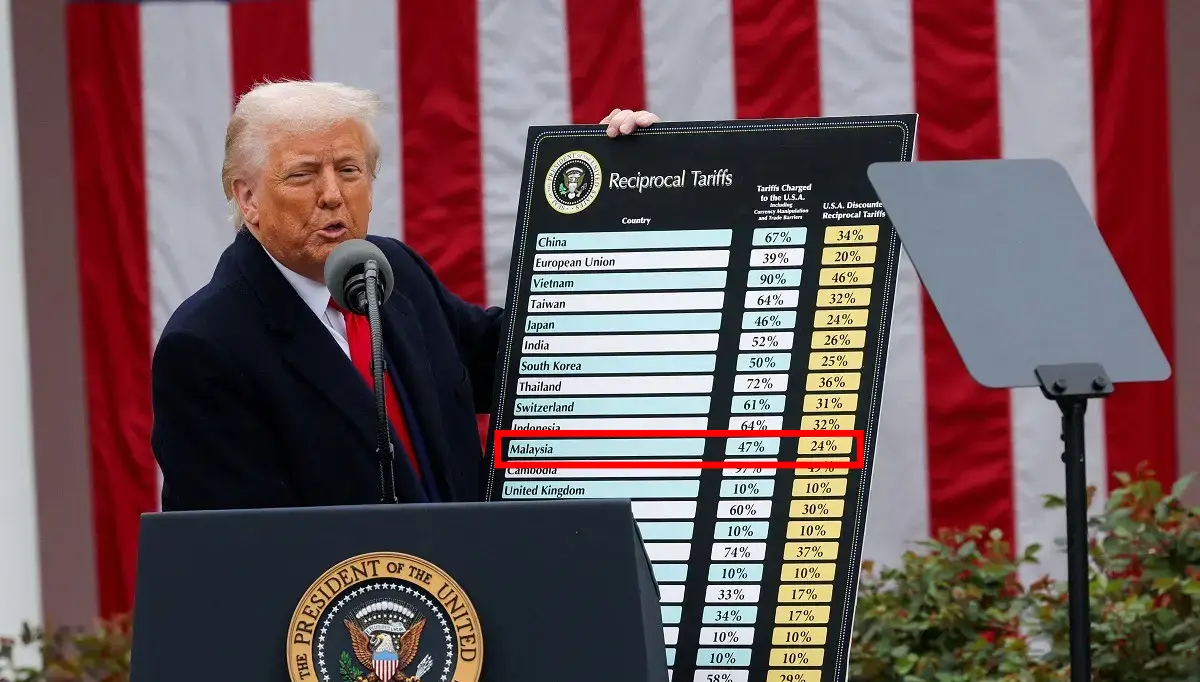
The Malaysian economy is expected to face some headwinds next year. According to the Investment, Trade and Industry Minister, Datuk Seri Tengku Zafrul Abd Aziz, a 19% tariff imposed by the United States is projected to slow down Malaysia’s economic growth in 2025.
Speaking in parliament, the minister outlined the potential effects of this international trade development on the nation’s economy and the government’s plans to navigate the challenge.
How Will The Tariffs Affect Malaysia’s Economy?
The primary impact of the US tariffs will be on Malaysia’s Gross Domestic Product (GDP), which is the total value of goods and services produced by the country. In a written parliamentary reply, Tengku Zafrul stated that Malaysia’s GDP growth for 2025 is forecast to be reduced by between 0.6 and 1.2 percentage points due to these new tariffs.
The effects are also expected to extend into the following year, with GDP growth in 2026 also likely to see a slight decline. For now, it is too early to determine the precise impact on inflation and the prices of essential goods like food, energy, and transportation.
Bank Negara Malaysia Maintains Its Forecast
Despite these new challenges, Bank Negara Malaysia has maintained its existing GDP growth projection for 2025, which stands between 4.0% and 4.8%.
According to BNM Governor Datuk Seri Abdul Rasheed Ghaffour, the central bank had already accounted for the possibility of new tariffs during its forecasting process. BNM’s projections had considered potential tariffs of between 25% and 30%, which is higher than the 19% figure announced. As such, the central bank’s official economic outlook for next year remains unchanged for the time being.
Government’s Strategy to Lessen the Impact
The government is not standing by idly. Tengku Zafrul assured that proactive and integrated strategies are being implemented to reduce the negative effects of the tariffs on the economy and the public.
These plans involve several key actions. The government aims to improve collaboration between its various agencies to create a more unified response. It is also encouraging Malaysian exporters to take full advantage of the 18 Free Trade Agreements that Malaysia is a part of, which can provide better access to other international markets. Furthermore, the government will continue to push for reforms that improve efficiency, encourage automation, and boost productivity across local industries.
Why Are The Tariffs Being Imposed?
The minister explained that Malaysia is facing these tariffs from the United States because the government refused to cross certain “red lines” during trade negotiations. However, he also clarified that Malaysia will not retaliate with its own tariffs.
The decision not to retaliate stems from the United States’ significant role as a major investor and a key export destination for both Malaysia and the broader ASEAN region. The government’s main priority remains to protect the well-being of the people and ensure that access to essential needs is not compromised by these global economic pressures.
Follow us on our official WhatsApp channel for the latest money tips and updates.
As a creative content writer, Eloise has covered finance, business, lifestyle topics, and even moonlights as a singer-songwriter outside of RinggitPlus. Her current interests are learning the best ways to optimise spending and credit card hacks to gain more airline miles.
As a creative content writer, Eloise has covered finance, business, lifestyle topics, and even moonlights as a singer-songwriter outside of RinggitPlus. Her current interests are learning the best ways to optimise spending and credit card hacks to gain more airline miles.





Comments (0)