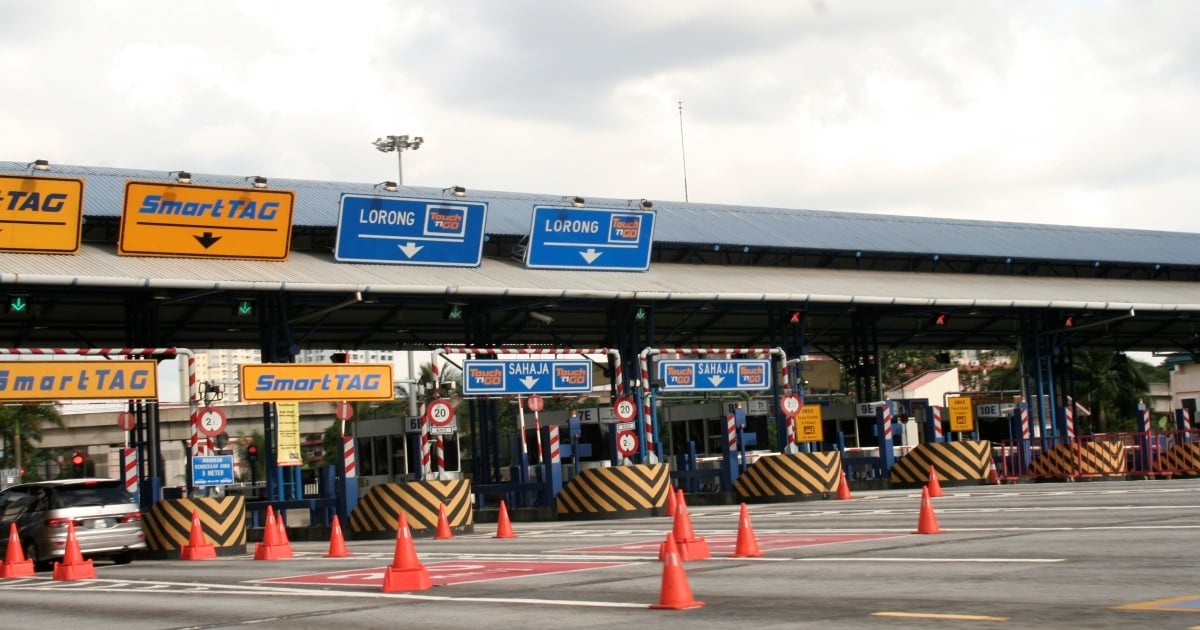
The government would need to spend billions of ringgit each year on highway maintenance if toll roads were abolished, according to the Works Ministry. This significant financial commitment has led the government to rule out removing tolls nationwide, citing more pressing infrastructure needs in non-tolled regions such as Kelantan, Terengganu, Sabah, and Sarawak.
Works Minister Datuk Seri Alexander Nanta Linggi said the cost of maintaining highways without toll collection would divert funds away from underserved areas. He made the remarks during Minister’s Question Time in the Dewan Rakyat on 29 July, responding to questions about whether the government planned to eliminate tolls, as previously proposed by some political parties.
Government Prioritising Development In Non-Tolled States
Nanta explained that it is more practical to allocate public funds toward improving road infrastructure in states and territories where tolls are not collected. Abolishing toll roads across the country, he said, would place a heavy strain on public finances, limiting the government’s ability to invest in critical development projects outside the Klang Valley and major urban centres.
He added that while there is no current plan to abolish tolls, the government continues to look for ways to ease the financial burden on road users.
Toll Reductions Possible After Concession ROI
Instead of a full removal, the minister suggested that toll reductions may be possible once highway concessionaires reach their projected return on investment. This would allow for gradual adjustments to toll rates, especially on highways where the original construction and operating costs have been recovered.
Such an approach, Nanta said, is more financially sustainable and would benefit road users over time, without compromising the country’s broader infrastructure goals.
Toll Hike Postponed, Saving Drivers Up To RM1,632 A Year
Meanwhile, Nanta said toll road rates on 10 highways would have increased by 79% to 83% for private cars if the government had not postponed the adjustment. The increase would have added between RM0.50 and RM4.56 per trip. For regular users, this could mean about RM136 more per month, or RM1,632 annually, based on 240 days of travel.
He said the decision to delay the hike was made to ease the cost of living, especially for the estimated 941,000 motorists who rely on tolled highways each day.
The toll hike deferral applies to all vehicle classes, Class 1 (private cars) through Class 5 (buses), on the affected highways. However, on the LLB highway, the postponement only applies to Class 5, as the other vehicle classes have already reached the toll cap specified in the concession agreement.
In Malaysia, vehicle classification determines toll rates: Class 2 includes vans and light commercial vehicles, Class 3 covers heavy vehicles with three or more axles, Class 4 refers to taxis, and Class 5 to buses.
Government To Pay Compensation To Concessionaires
However, Nanta said postponing the toll hikes is not without cost as the government is expected to compensate highway concessionaires approximately RM568.92 million annually. This figure is a projection and will be finalised based on actual traffic volume, verified through operational audits conducted jointly by the government and the concessionaires.
The compensation ensures that private operators continue to meet their financial obligations, even with toll adjustments paused.
Follow us on our WhatsApp Channel for the latest money tips and updates.
Samuel writes about personal finance and financial news, focusing on how banking updates, policies, and promotions affect everyday money decisions. He enjoys making complicated financial topics easier to follow. Outside of writing, he spends his time watching TV shows and occasionally convincing himself he will only watch one episode.
Samuel writes about personal finance and financial news, focusing on how banking updates, policies, and promotions affect everyday money decisions. He enjoys making complicated financial topics easier to follow. Outside of writing, he spends his time watching TV shows and occasionally convincing himself he will only watch one episode.
We provide weekly updates on every Friday at 5pm on the prices of RON95, RON97 and Diesel in Malaysia and a chart that shows the movement of fuel prices across a 6-week period. Bookmark this page now!







Comments (0)