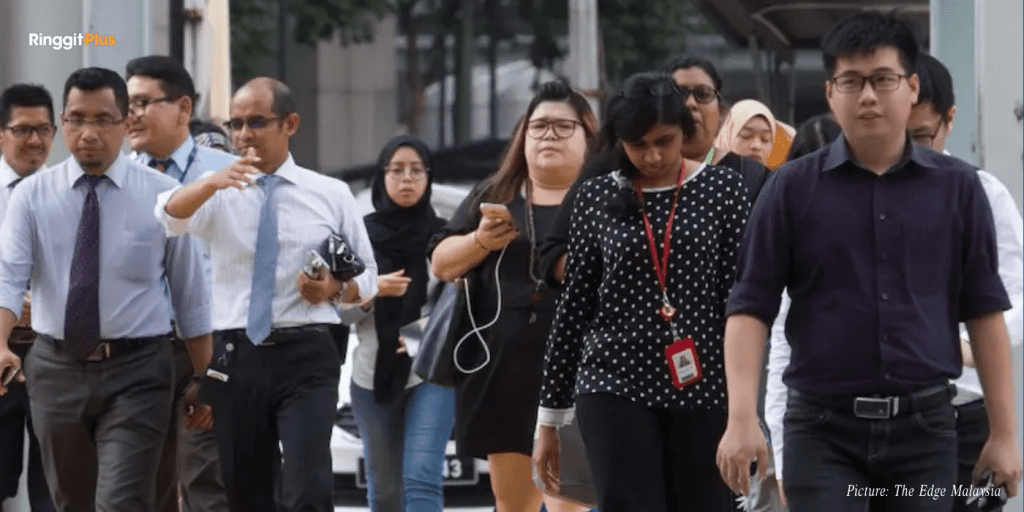
Malaysian employers are expecting to offer higher salaries and bonuses in 2026, based on the latest Salary Survey for Executives and Non-Executives published by the Malaysian Employers Federation. The federation represents more than 5,000 employers across various sectors, and its findings indicate a generally positive outlook for next year’s remuneration trends.
According to the survey, employers are projecting average bonus payments of 2.16 months for executives and 2.02 months for non-executives in 2026. Salary adjustments are also expected to increase, with companies forecasting average increments of 5.33% for executives and 5.01% for non-executives.
MEF president Datuk Dr Syed Hussain Syed Husman said that performance continues to be the main determinant of salary increases. Company financial capacity and standard annual review cycles also influence final adjustments.
Review Of 2025 Compensation Trends
The survey highlights that 82% of companies awarded bonuses in 2025. Executives received average payouts of 2.17 months, while non-executives received 1.96 months. Nearly 90% of companies granted salary increases, averaging 5.03% for executives and 4.65% for non-executives.
MEF’s review of 236 collective agreements across 36 industries further confirms that company performance remains the strongest factor shaping across-the-board adjustments. Individual performance also plays a significant role. For 2024, the average across-the-board adjustment was recorded at 5.06%, reflecting a steady post-pandemic wage recovery.
Digital Transformation And AI Adoption On The Rise
Beyond salary considerations, companies are accelerating digital transformation initiatives as interest in artificial intelligence continues to grow. The survey notes that 74.1% of employers are somewhat familiar with AI tools, although adoption levels remain moderate. Slightly more than one third of companies have implemented AI in their operations.
A further 19.1% plan to adopt AI within the next 12 months. However, 17.6% are unsure of their next steps, and 26% have yet to begin adoption. Employers cited several barriers, including high implementation costs, limited internal expertise, and concerns related to cyber security or ethics.
The survey also found that only 16.5% of employers believe Malaysia currently has sufficient AI talent. About one third consider the talent supply inadequate, while more than half remain unsure of the country’s readiness.
Rising Focus On Healthcare Costs And Employee Well-being
Medical expenses are another emerging concern for employers. Findings from the MEF Medical Benefits Survey 2025, which covered 231 companies, show that 68% of employers expect medical costs to rise in the coming year.
To manage these expenses, companies are expanding preventive health initiatives. Employers report growing adoption of health awareness programmes, wellness and disease-prevention initiatives, and biometric screening. These efforts aim to support employee well-being while managing long-term healthcare costs.
Mental health remains a significant priority. According to the survey, 74% of employers identify workplace stress and the pressure to meet performance targets as the main issues affecting employees. This aligns with broader workplace trends in which organisations are placing greater emphasis on holistic well-being alongside compensation and benefits.
Follow us on our official WhatsApp channel for the latest money tips and updates.
Samuel writes about personal finance and financial news, focusing on how banking updates, policies, and promotions affect everyday money decisions. He enjoys making complicated financial topics easier to follow. Outside of writing, he spends his time watching TV shows and occasionally convincing himself he will only watch one episode.
00votes
Article Rating
SHARE
About THE AUTHOR
Samuel Chua
Samuel Chua
Samuel writes about personal finance and financial news, focusing on how banking updates, policies, and promotions affect everyday money decisions. He enjoys making complicated financial topics easier to follow. Outside of writing, he spends his time watching TV shows and occasionally convincing himself he will only watch one episode.
We provide weekly updates on every Friday at 5pm on the prices of RON95, RON97 and Diesel in Malaysia and a chart that shows the movement of fuel prices across a 6-week period. Bookmark this page now!







Comments (0)