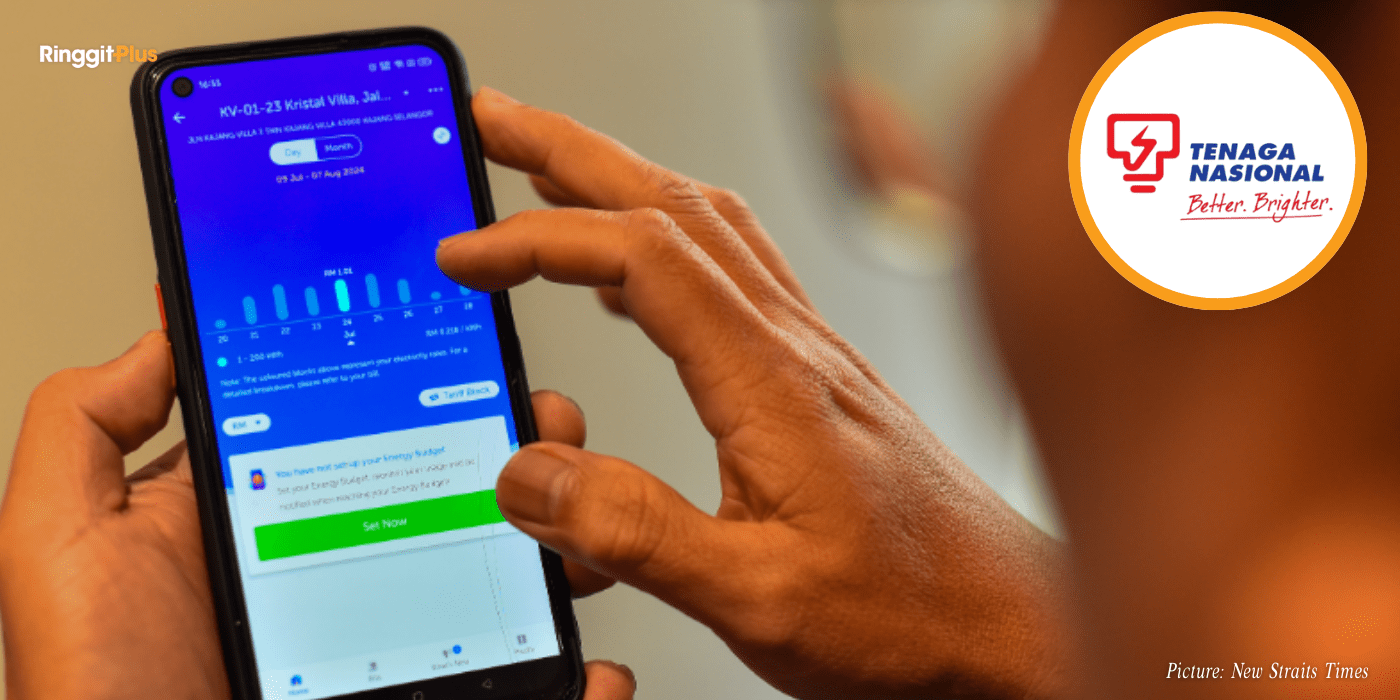
With cost-of-living pressures shaping how Malaysians manage their monthly expenses, many households are exploring ways to track and optimise their electricity use. One option is Tenaga Nasional Berhad’s Time-of-Use feature, which became available to domestic users on 1 July.
According to TNB, more than 70,000 households have signed up since the launch. This early traction suggests that many consumers are open to tools that help them better understand and plan their energy usage.
How Time-of-Use Supports National Energy Goals And Changes Household Habits
The expansion of the Time-of-Use tariff to residential users aligns with Malaysia’s National Energy Transition Roadmap, which sets out long-term goals for a more efficient, sustainable, and resilient national grid. Time-of-Use encourages households to shift part of their consumption to off-peak periods, when overall demand is lower.
This demand-shifting approach complements ongoing national initiatives that promote responsible and sustainable energy use. Reducing pressure during peak hours supports grid stability and improves the efficiency of electricity generation and distribution.
At the household level, Time-of-Use provides a structured tariff that helps consumers identify when electricity is most cost-effective. TNB noted a rise in customer enquiries from users seeking guidance on how to adjust cooling, laundry, and electric vehicle charging to match off-peak periods.
This growing interest reflects increased awareness of how deliberate energy planning can help households manage their bills more effectively over time.
Customer-first Strategy Remains Central
Alongside Time-of-Use, TNB reaffirmed its broader commitment to customer wellbeing. The company noted that customer needs, community support, and system resilience remain central to its long-term strategy.
In its third-quarter update, TNB highlighted how ongoing investments in customer-oriented infrastructure support reliable service delivery and form an important part of its transformation efforts.
Smart Meter Rollout Expands Nationwide
To support more informed energy management, TNB is also accelerating the installation of smart meters. The devices give households more precise and transparent insights into real-time electricity consumption and are designed to complement Time-of-Use adoption.
As of September 2025, more than 5 million smart meters have been installed nationwide. TNB described this as progressive adoption that enables data-driven energy planning and enhances visibility over daily and hourly usage patterns.
Financial Performance Remains Stable
TNB recorded cumulative earnings of RM3.2 billion in the first nine months of 2025. This result is in line with market expectations and reflects firm electricity demand, stronger sales across key customer segments, and lower net finance costs.
Total electricity sales reached 99,930 gigawatt-hours as at September, supported mainly by steady growth in the commercial sector. TNB also registered a foreign-exchange translation gain of RM350 million, attributed to the ringgit strengthening against the United States dollar to 4.215 in September 2025 from 4.471 in December 2024.
Continued Investment In Grid Reliability And Digital Capabilities
Grid reliability and customer experience remain key focus areas for TNB. In the third quarter alone, the company invested RM3.1 billion in reliability-focused initiatives, contributing to cumulative capital expenditure of RM8.3 billion for the year to date.
These measures have delivered measurable improvements. The annualised System Average Interruption Duration Index improved to 46.65 minutes, compared with 47.62 minutes previously, reflecting progress in reducing the average duration of supply interruptions.
Progress In Digital Services And Electric Vehicle Infrastructure
Digital accessibility continues to be an important part of TNB’s strategy. The myTNB app now serves 7.1 million users, representing about 70 per cent of the company’s customer base.
TNB’s electric vehicle initiatives also continue to advance in line with the national EV roadmap. As at September, 5,109 EV charge points were installed across Malaysia. The charging network supplied more than 10 gigawatt-hours of electricity in 2025, generating around RM5.1 million in revenue.
The company said this reflects steady adoption of its charging solutions and growing demand for accessible and reliable EV infrastructure.
Commitment To Long-term Customer Value
TNB president and chief executive officer, Megat Jalaluddin Megat Hassan, emphasised the company’s commitment to supporting and informing its customers. He said TNB will continue strengthening digital access, service channels, and operational response systems to enhance the overall energy experience for Malaysians.
He added that the company remains committed to taking deliberate steps to meet evolving needs and ensure long-term system resilience.
Follow us on our official WhatsApp channel for the latest money tips and updates.
Samuel writes about personal finance and financial news, focusing on how banking updates, policies, and promotions affect everyday money decisions. He enjoys making complicated financial topics easier to follow. Outside of writing, he spends his time watching TV shows and occasionally convincing himself he will only watch one episode.
51vote
Article Rating
SHARE
About THE AUTHOR
Samuel Chua
Samuel Chua
Samuel writes about personal finance and financial news, focusing on how banking updates, policies, and promotions affect everyday money decisions. He enjoys making complicated financial topics easier to follow. Outside of writing, he spends his time watching TV shows and occasionally convincing himself he will only watch one episode.
We provide weekly updates on every Friday at 5pm on the prices of RON95, RON97 and Diesel in Malaysia and a chart that shows the movement of fuel prices across a 6-week period. Bookmark this page now!






Comments (0)