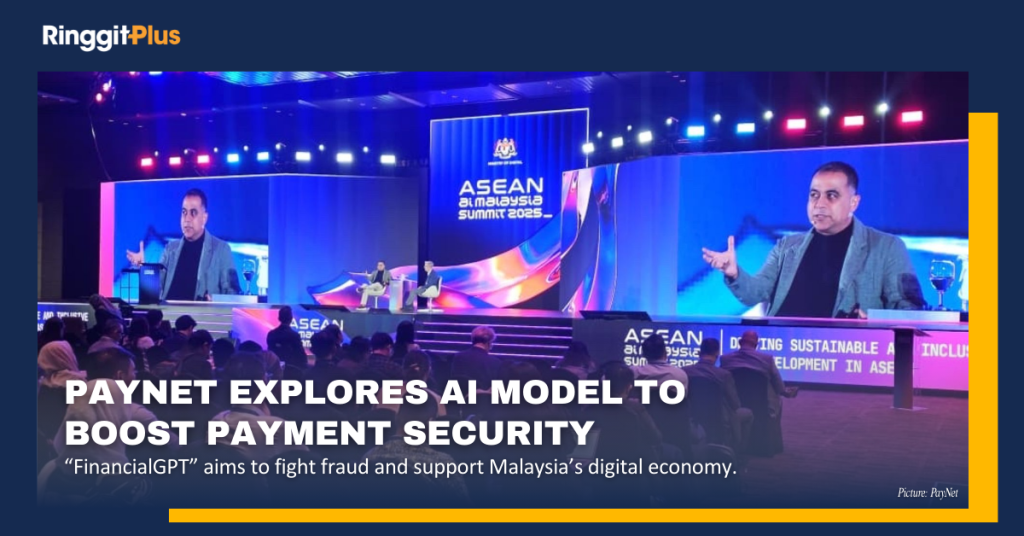
In an interview with Bernama, PayNet chief of staff, Dr Endry Lim Zhen Wen, explained that the model, also referred to as a large transaction model (LTM), would be trained exclusively on Malaysia’s financial transaction data. This approach is designed to build resilience against cyber threats while keeping sensitive information within the country.
Balancing Security And Inclusion
“We believe this model can tackle fraud and scams, ensure broader financial inclusion, and address compliance challenges unique to our market,” Lim said. “It combines global best practices with national sovereignty, making it suited to Malaysia’s needs.”
He added that PayNet is taking a gradual approach, developing its capabilities step by step, and ensuring each model undergoes checks for explainability, bias, and fairness. “Accountability is non-negotiable,” he stressed.
Global Research Partnerships
To advance this effort, PayNet is collaborating with leading researchers from international institutions including MIT’s Computer Science and Artificial Intelligence Laboratory (CSAIL) and Imperial College London. The partnerships focus on frontier issues such as cyber risk, data privacy, and AI governance.
According to Lim, these collaborations provide access to advanced global research while keeping PayNet’s solutions aligned with Malaysia’s regulatory framework and local needs.
Building Talent And Public Trust
Lim also highlighted that Malaysia’s ambition to develop as an AI hub depends on addressing two major challenges: talent development and public trust.
“The industry is short of skilled AI and data science professionals, particularly those with experience in financial services. This shortage limits the deployment of secure and fair AI solutions at scale,” he said.
Public trust, meanwhile, hinges on transparency and accountability. “In finance, where customer protection and system resilience are vital, building trust is essential,” he noted.
Beyond Regulation: The Need For Collaboration
Lim emphasised that regulation alone cannot address these challenges. Genuine progress, he said, requires strong collaboration between government, industry, and academia.
He added that PayNet’s role in the regional payments landscape places it in a pivotal position, especially as Malaysia helps to drive the ASEAN Digital Economy Framework Agreement (DEFA).
ASEAN Digital Economy Outlook
DEFA sets out a vision for a real-time, multi-currency payment system across ASEAN, designed to reduce transaction costs, speed up settlements, and improve overall efficiency.
According to Lim, this regional framework could not only strengthen economic growth but also expand ASEAN’s digital economy to an estimated US$2 trillion by 2030 (approximately RM8.4 trillion, based on US$1 = RM4.20)
Follow us on our official WhatsApp channel for the latest money tips and updates.
Samuel writes about personal finance and financial news, focusing on how banking updates, policies, and promotions affect everyday money decisions. He enjoys making complicated financial topics easier to follow. Outside of writing, he spends his time watching TV shows and occasionally convincing himself he will only watch one episode.
Samuel writes about personal finance and financial news, focusing on how banking updates, policies, and promotions affect everyday money decisions. He enjoys making complicated financial topics easier to follow. Outside of writing, he spends his time watching TV shows and occasionally convincing himself he will only watch one episode.
We provide weekly updates on every Friday at 5pm on the prices of RON95, RON97 and Diesel in Malaysia and a chart that shows the movement of fuel prices across a 6-week period. Bookmark this page now!








Comments (0)