Most Islamic banking products in Malaysia are sold as individual transactions. You open a savings account here, take a home financing there, and maybe set up a takaful plan on the side. Each product is sold and managed separately, and the bank’s job ends once the paperwork is signed. Hong Leong Islamic Bank is now explicitly trying to change that.
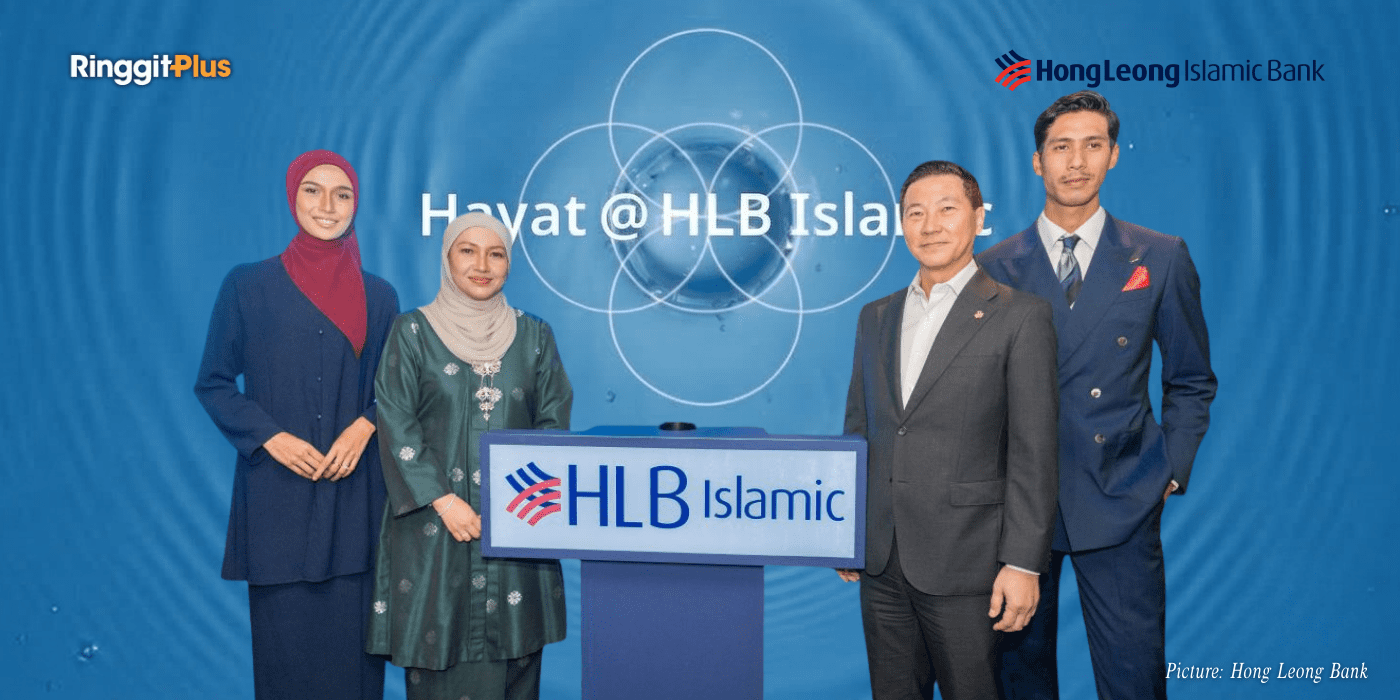
The bank, which rebranded to HLB Islamic, has simultaneously launched a structured wealth framework called Hayat @ HLB Islamic. The rebrand brings its consumer identity in line with the broader Hong Leong Bank name. The Hayat proposition, though, is the more consequential development for customers: it is the bank’s attempt to reorganise its entire product suite around five life stages, grouped by where a customer is in life, not by product category.
What the Hayat Framework Actually Organises
The five pillars HLB Islamic has structured Hayat around are Wealth Creation and Accumulation, Wealth Protection, Wealth Purification, Wealth Enhancement, and Wealth Distribution. The bank frames these as a lifecycle sequence, with the logic being that your financial needs shift predictably as your life does, and your banking relationship should shift with them.
HLB Islamic wants to be the institution you return to at each stage. When you’re starting out, that means savings and Shariah-compliant investments. As you build a household, it means home or personal financing. When you have dependents, it means takaful coverage. Later on, it means estate planning: helping customers decide who receives their assets and how, with the intention of passing on something deliberate.
The rebrand does not change any product rates, financing terms, or eligibility criteria. Existing customers remain on their current account structures. What has changed is how the bank is presenting and grouping its offerings, and how it intends to serve customers across life stages as a single relationship.
The Zakat, Sadaqah, and Waqf Integration Is a Genuinely Useful Change
One concrete improvement sits within the HLB Connect app. Customers can now access Zakat, Sadaqah, and Waqf services directly through the app, without being redirected to external platforms or third-party portals.
For customers who already use HLB Islamic for day-to-day banking, this removes extra steps that previously required logging into separate systems or physically visiting collection points. The integration does not change how much you pay or to whom. Zakat contributions are still calculated on your own assets and income and processed to the relevant state religious authorities. What it changes is how easily you can act on these obligations as part of a regular banking routine.
This is a functional improvement, not a cosmetic one. Embedding social finance contributions into the same app as salary crediting and bill payments makes it more likely that customers act on these intentions rather than pushing them to another day.
Who This Approach Is Designed For
The Hayat framework is most relevant to customers who already bank with HLB Islamic and have multiple financial needs across savings, financing, protection, and estate planning. For someone managing all of these through different institutions, the pitch is that consolidating them under one bank offers a more coherent picture of their finances.
It is less immediately relevant to customers who use HLB Islamic for a single product (say, a savings account or a specific home financing) and have no near-term plans to expand that relationship.
The lifecycle framing also assumes a longer planning horizon. If you’re in your twenties with a modest income and no dependents, the estate planning and purification pillars are unlikely to feel pressing. The framework is built to be relevant across decades, but the full structure only becomes useful once your finances have enough moving parts to coordinate.
HLB Islamic has not announced preferential profit rates or fee reductions for customers who engage across multiple Hayat pillars. The commercial terms of individual products remain unchanged. If the bank introduces bundled pricing or incentives over time, that would make a stronger financial case for organising your banking this way. For now, what the framework offers is structure, not savings.
The Rebrand in Context
The shift from “Hong Leong Islamic Bank” to “HLB Islamic” is partly cosmetic and partly strategic. Shortening the name to align with the parent bank’s HLB branding positions the Islamic banking arm as a co-equal part of the group, where it had previously operated under a longer, more distinct name. Hong Leong Bank’s group CEO, Kevin Lam, has explicitly framed HLB Islamic as a “primary engine of growth” for the group, signalling that the Islamic banking division is being positioned for more aggressive expansion within the broader Hong Leong Financial Group network.
Investment in a banking brand tends to translate into improved digital features and wider product availability over time, though HLB Islamic was already a licensed Islamic banking entity and the underlying regulatory structure does not change. The shift is in commercial emphasis.
For customers considering an Islamic banking relationship, HLB Islamic is worth evaluating alongside Maybank Islamic, CIMB Islamic, and Bank Islam. The Hayat framework distinguishes how the bank presents its products, but the practical comparison still comes down to profit rates, processing times, and eligibility conditions. The promotional campaign tied to the launch, a travel prize draw to Japan, China, and Vietnam, is a launch incentive and not a reason on its own to restructure your banking arrangement.
Follow us on our official WhatsApp channel for the latest money tips and updates.
Samuel writes about personal finance and financial news, focusing on how banking updates, policies, and promotions affect everyday money decisions. He enjoys making complicated financial topics easier to follow. Outside of writing, he spends his time watching TV shows and occasionally convincing himself he will only watch one episode.
00votes
Article Rating
SHARE
About THE AUTHOR
Samuel Chua
Samuel Chua
Samuel writes about personal finance and financial news, focusing on how banking updates, policies, and promotions affect everyday money decisions. He enjoys making complicated financial topics easier to follow. Outside of writing, he spends his time watching TV shows and occasionally convincing himself he will only watch one episode.






Comments (0)