Alex Cheong Pui Yin
Previously covered recruitment-related stories and had a short stint as a copywriter for the property industry. She subsequently developed an interest in investment and robo-advisors.

5th April 2024 - 7 min read

Malaysia has officially kickstarted its tax season, which means you can now file your taxes from now until 30 April or 15 May 2024 (depending on whether you’re doing it manually or online via the e-Filing portal). Of course, with a new tax year, you’ll also see some tax updates, which include amendments to existing tax reliefs.
Here, we’ve listed out the various changes that you will see as you file your taxes this year for the year of assessment 2023 (YA 2023). Being able to recognise them will ensure that you’re not missing out on any new benefits or making unintentional errors during the process – so let’s dive in!

During the tabling of a revised Budget 2023, Prime Minister Datuk Seri Anwar Ibrahim – who is also the Finance Minister – had proposed some changes to the income tax rates for selected income brackets. Specifically:
Here’s a quick look at the new income tax rates for YA 2023 your reference, in comparison to the rates imposed for YA 2022:
| Chargeable income band (RM) | Previous income tax rate (YA 2022) | New income tax rate (YA 2023) | Changes in tax rates |
| 0 – 5,000 | 0 | 0 | N/A |
| 5,001 – 20,000 | 1 | 1 | N/A |
| 20,001 – 35,000 | 3 | 3 | N/A |
| 35,001 – 50,000 | 8 | 6 | -2% |
| 50,001 – 70,000 | 13 | 11 | -2% |
| 70,001 – 100,000 | 21 | 19 | -2% |
| 100,001 – 250,000 | 24 | 25 | +1% |
| 250,001 – 400,000 | 24.5 | 25 | +0.5% |
| 400,001 – 600,000 | 25 | 26 | +1% |
| 600,001 – 1,000,000 | 26 | 28 | +2% |
| 1,000,001 – 2,000,000 | 28 | 28 | N/A |
| Exceeding 2,000,000 | 30 | 30 | N/A |
Datuk Seri Anwar said that these adjustments to the rates are expected to free up up to RM1,300 additional disposable income for the middle income group. In turn, it is hoped that this will provide the people with some level of financial flexibility in coping with the increased cost of living.
We’ve also prepared an explainer video on how you may be impacted by these tax revisions:
Separately, Treasury secretary-general Datuk Johan Mahmood Merican had also come forward to explain why there are no tax hikes for T20 individuals who are earning above RM1 million. He stated that they are already paying a sufficiently high tax rate of 28% and 30%, and will actually also be paying more in tax due to application of the progressive tax system.
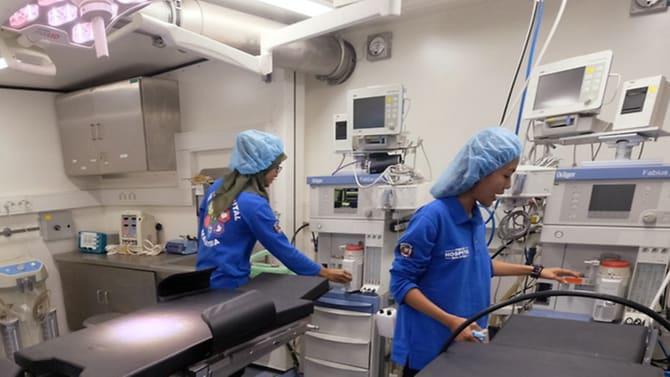
The income tax relief for medical treatment expenses for self, spouse, and child was previously capped at RM8,000. Under Budget 2023, it was increased by RM2,000 to a maximum of RM10,000, with an expanded scope to include more medical expenses (which we will highlight in the following point).
With the tax relief for medical expenses increased to RM10,000, its scope, too, was expanded to cover more medical treatment expenditures, namely a range of neuro-developmental disorders (limited to RM4,000 from the total RM10,000 tax relief).
Previously, the RM8,000 tax relief for medical expenses covered the following expenses:

For YA 2023, the revised tax relief for medical expenses will also cover intervention expenses incurred for the following learning disabilities/conditions:
These will include diagnostic assessments and early intervention/rehabilitation programmes that are conducted by medical practitioners who are registered with the Malaysian Medical Council or under the Allied Health Profession Act 2016.
The tax relief provided for payment of life insurance premiums or takaful contributions on life insurance policies (for self and spouse) has now been expanded to also include self or voluntary EPF contributions (limited to RM3,000).
Prior to this, pensionable public servants could claim up to RM7,000 for their life insurance premium payments or takaful contributions, whereas private sector employees could claim up to RM3,000 for life insurance/takaful, and up to another RM4,000 for statutory or voluntary EPF contributions. For YA 2023, they can claim additional voluntary EPF contributions under the allocation for life insurance premiums or takaful contributions on life insurance policies.
During his announcement, Datuk Seri Anwar said that this move was meant to incentivise more Malaysians to rebuild and grow their retirement nest, after it was revealed that 6.7 million contributors above the age of 55 had less than RM10,000 left in their EPF accounts for their retirement. This deficit was attributed primarily to the four Covid-related withdrawals that had been permitted previously, namely i-Lestari, i-Sinar, i-Citra, and a final RM10,000 withdrawal.

Aside from the above amendment, there is also a second revision made to the RM7,000 tax relief for life insurance premium payments and EPF contributions. The tax relief has also been restructured so that both public servants and private sector employees are now similarly restricted to the following limits:
This update will primarily impact civil servants who do not make voluntary EPF contributions as they were previously allowed to claim the full RM7,000 tax relief for life insurance premiums/takaful contributions; now, this will be limited to only RM3,000. If they want to maximise the full RM7,000 tax relief, they will need to start making voluntary EPF contributions.
Private sector employees, meanwhile, will see no change to how they can claim this tax relief as the RM3,000 and RM4,000 breakdown has always applied to them. The government said that this restructuring was made to encourage voluntary contributions so that Malaysians can increase their retirement savings in preparation for old age.
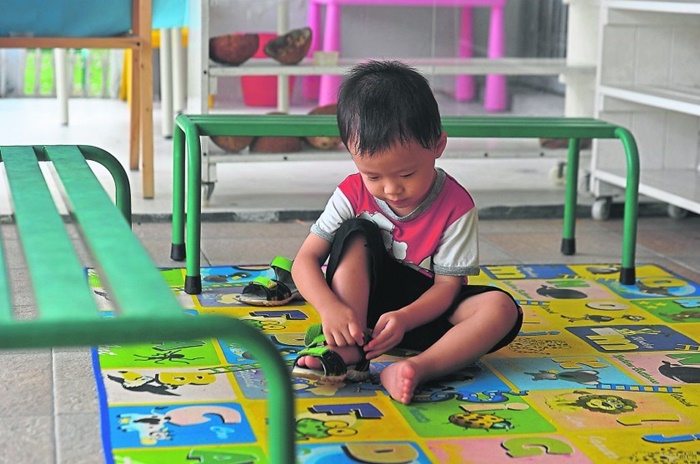
Parents paying fees to registered childcare centres and kindergartens will be able to continue claiming a tax relief of up to RM3,000 for each child aged six years and below for YA 2023.
This particular tax relief was initially capped at RM2,000, but was subsequently increased to RM3,000 under the PENJANA stimulus package during Covid-19. Originally set to end during YA 2022, it was subsequently extended to YA 2023 (under Budget 2022), and then once again to YA 2024 (under the revised Budget 2023 tabled by Datuk Seri Anwar).
It has not been extended to YA 2025.

Depositors of the National Education Savings Scheme (Simpan SSPN) will also continue to be able to enjoy income tax relief of up to RM8,000 for YA 2023.
For context, the tax relief for SSPN savings has actually been a constant for Malaysian taxpayers each year; it was originally capped at RM6,000 prior to 2019, but was subsequently increased to RM8,000 under Budget 2019. Under the revised Budget 2023, the government had initially opted to discontinue it, justifying this with the fact that various other new exemptions and tax benefits have also been introduced.
Following public pressure, however, Datuk Seri Anwar eventually agreed to reverse the decision and once again include this tax relief as part of perks offered under the revised Budget 2023. As such, it has now been extended until YA 2024.
***
Now that you’re aware of these updates, make sure you do not miss out on them when filing your taxes! We’ll also be publishing our comprehensive YA 2023 income tax guide soon, so make sure to keep an eye out for that as well if you need in-depth help.
Previously covered recruitment-related stories and had a short stint as a copywriter for the property industry. She subsequently developed an interest in investment and robo-advisors.







Comments (4)
If employee from private sector with total EPF contribution RM10K and life insurance of RM2K, tax relief for “Contributions to EPF or other approved schemes (inclusive of voluntary EPF contributions)” is RM4K, and “Life insurance premium/takaful contribution and additional voluntary contribution to EPF” shall be RM2K only or RM3K?
The tax relief for EPF contributions caps at RM4,000. For life insurance or takaful contributions, it’s either RM2,000 or RM3,000 if it’s for extra EPF contributions. So, you can get up to RM6,000 in total relief. Contact them for latest info.
Previously pensioners could claim life insurance premiums relief up to RM7000 as they do not contribute to EPF. Now it is capped at RM3000 and there is no provision for them to claim the RM7000 relief. Is that correct? In your upcoming writing, could you cover the tax exempt incomes received from overseas such as dividends of fund investments and money remitted by children working overseas? Thank you.
Yup, as of YA 2023 there is a change to the amount claimable for current and former civil servants. The only way to still get the full RM7000 is to self-contribute to EPF. We’ve amended our article and other instances where this was mentioned – thanks for your comment! For your other queries, income received overseas is partially covered here: https://ringgitplus.com/en/blog/income-tax/how-to-file-your-income-tax-when-youre-freelancing.html For the most part, you don’t need to pay taxes for overseas income provided the taxes are paid in the country of origin. This includes dividends as they are already taxed to the company, and for remittance, that’s not… Read more »