Malaysia has topped the Global Islamic Economy Indicator for the 12th consecutive year, according to the State of the Global Islamic Economy (SGIE) Report 2025/2026 published by DinarStandard. Halal exports reached RM68.52 billion in 2025, a 10.9% increase from the previous year, with the halal industry now accounting for 4.3% of national exports.
The ranking covers six sectors of the Islamic economy, and Malaysia placed first in three: halal food, Islamic finance, and halal pharmaceuticals and cosmetics. It ranked second in media and recreation, and fourth in both Muslim-friendly travel and modest fashion.
First Place In Food, Finance, And Pharmaceuticals
The SGIE report evaluates countries on halal trade facilitation, certification standards, and industry development. Malaysia’s first-place finishes in three out of six sectors cover the full chain, from production and certification through to exports.
Halal Development Corporation (HDC) chairman Prof Dr Mohd Afandi Salleh attributed the performance to the strength of the country’s halal certification standards and trade infrastructure.
“Through stronger halal trade connectivity and proactive halal diplomacy, we are contributing to a more integrated and resilient global halal economy,” he said.
Islamic finance, one of the three sectors where Malaysia leads, has grown into a parallel banking system used by both Muslim and non-Muslim consumers. If you hold an Islamic savings account, fixed deposit-i, or Shariah-compliant credit card, the ranking partly reflects the strength of the system those products sit within.
RM68.5 Billion In Halal Exports
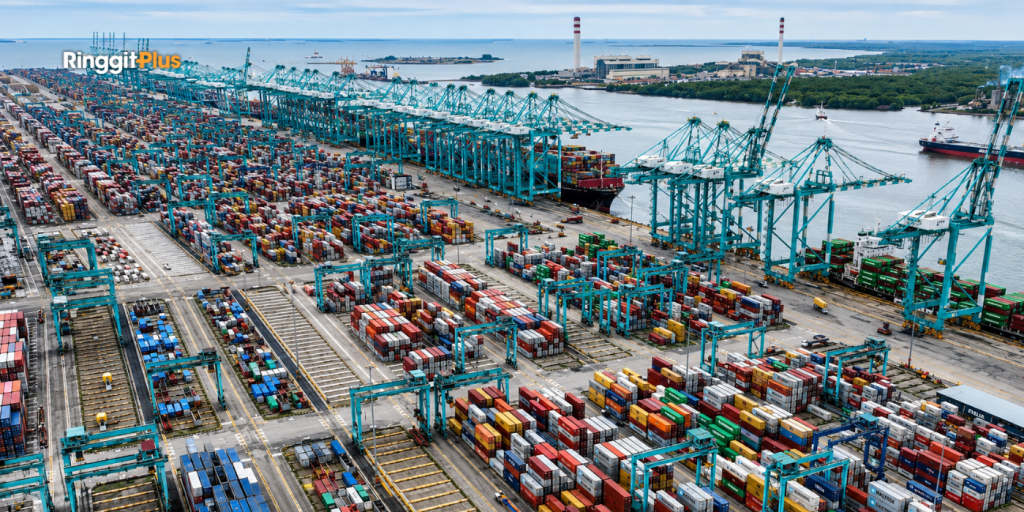
Food and beverage and halal ingredients drove much of the RM68.52 billion in halal exports recorded in 2025. At 4.3% of national exports, the halal industry is a smaller contributor than electronics or petroleum, but it grew 10.9% year-on-year in 2025.
Globally, Muslim consumer spending reached US$2.6 trillion in 2024 and is projected to grow to US$3.56 trillion by 2029, a roughly 37% increase over five years. That demand underpins Malaysia’s role as a halal manufacturing and distribution hub, connecting local producers to Muslim consumer markets across Southeast Asia and the Middle East.
Beyond Food And Consumer Goods
The SGIE report also flagged emerging opportunities within the halal economy, including digitalised halal certification, blockchain-enabled traceability, Islamic digital finance, and sustainable halal production.
These areas extend the halal sector’s reach beyond its traditional base of food, cosmetics, and pharmaceuticals into technology and financial services. If you work in or supply to the halal industry, Shariah-compliant fintech and digital certification are the newer areas attracting policy attention and investment.
Follow us on our official WhatsApp channel for the latest money tips and updates.
As a creative content writer, Eloise has covered finance, business, lifestyle topics, and even moonlights as a singer-songwriter outside of RinggitPlus. Her current interests are learning the best ways to optimise spending and credit card hacks to gain more airline miles.
00votes
Article Rating
SHARE
About THE AUTHOR
Eloise Lau
Eloise Lau
As a creative content writer, Eloise has covered finance, business, lifestyle topics, and even moonlights as a singer-songwriter outside of RinggitPlus. Her current interests are learning the best ways to optimise spending and credit card hacks to gain more airline miles.




Comments (0)