Alex Cheong Pui Yin
Previously covered recruitment-related stories and had a short stint as a copywriter for the property industry. She subsequently developed an interest in investment and robo-advisors.

29th June 2021 - 8 min read
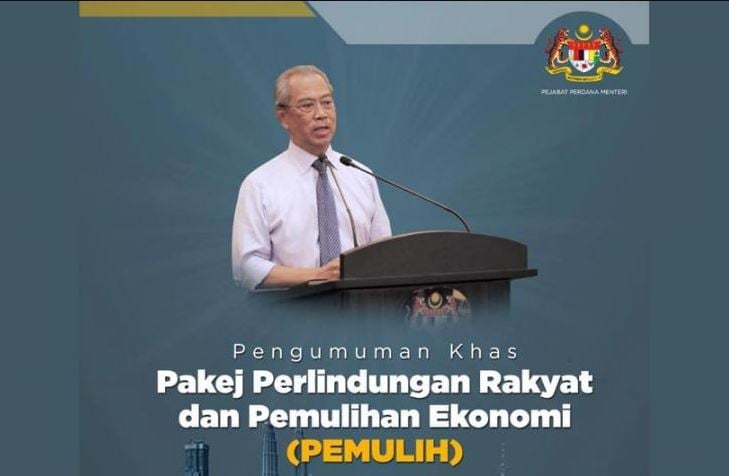
Last night, Prime Minister Tan Sri Muhyiddin Yassin revealed yet another stimulus package in a bid to support Malaysians amidst the country’s ongoing fight against the Covid-19 pandemic. Dubbed PEMULIH, it is the eighth stimulus package that the government has rolled out to date.
In total, the PEMULIH stimulus package is worth RM150 billion, and has three key areas of focus: continuing the Prihatin Rakyat agenda, supporting businesses, and increasing vaccination rate. Here are some key initiatives from the package that will be provided to micro, small and medium enterprises (MSMEs) as well as businesses.
Affected MSMEs – along with B40, M40, and T20 individual borrowers – will be able to tap into another six-month loan moratorium. This time, it will be provided without conditions (such as salary cuts or job losses), and no documentations are required during the application process either. Borrowers who wish to apply will only need to approach their respective banks and sign an agreement containing the amended loan terms when their applications are approved. This moratorium is set to begin on 7 July 2021.
Prior to this, the government had allowed an automatic moratorium that lasted between April to September 2020. The aid was soon followed by several other targeted repayment assistances between October 2020 until today.
Selected businesses in the tourism sector will be provided with a flat 10% discount on electricity bills between October and December 2021. These businesses include hotel operators, theme parks, convention centres, shopping malls, local travel agencies, as well as travel and tour agencies. This is an extension of the ongoing discount that was offered to them under the PEMERKASA+ stimulus package, slated to end in September 2021.
Geran Khas Prihatin was first introduced as a one-off financial aid for eligible SMEs and micro SMEs in the PRIHATIN stimulus package, aimed at ensuring their survival. Since then, the government has updated it several times to offer further assistance, especially to small traders that are still not allowed to operate during the MCO.
In the PEMULIH stimulus package, GKP 4.0 will be implemented with MSMEs receiving an additional cash assistance of RM500 in September and November, respectively. This is on top of an upcoming payment of RM1,000 that will be made in mid-July 2021 under GKP 3.0, offered via PEMERKASA+.
The latest Wage Subsidy Programme 4.0 will allow selected employers to receive a wage subsidy of RM600 for up to 500 employees, over a period of four months. Specifically, employers from all economic sectors will be eligible to apply for the aid for two months during the second phase of the National Recovery Plan (NRP). Following that, employers in sectors that are categorised as negative can tap into the programme for another two more months during the third phase of the NRP.
Unlike previous versions of the programme – which dictated that only employees with salaries less than RM4,000 are eligible for the aid – Wage Subsidy Programme 4.0 will be open to all employees regardless of their salaries.
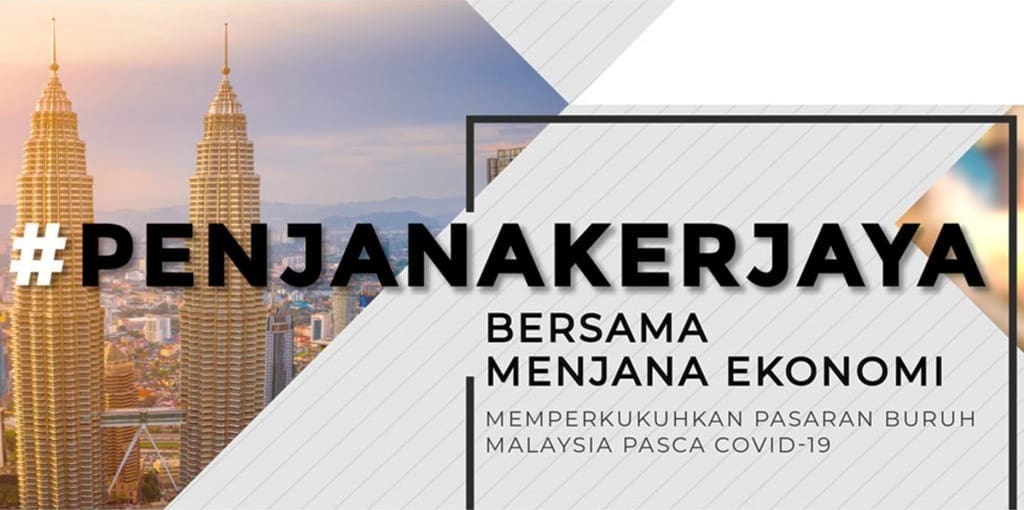
The PenjanaKerjaya programme – first introduced via the PENJANA stimulus package – was intended to increase job opportunities within the country following the MCO. It offers incentives to businesses that hire new employees or offer reskilling and upskilling programmes for their employees – and the current implementation of the programme is slated to end in June 2021.
Under PEMULIH, this programme will be extended once again, although this time with several updates. Key among these updates is the improvement made to the “Malaysianisation” programme, which seeks to encourage employers to hire local workers instead of foreign workers. This time round, the government is lowering the eligibility criteria for employers to claim this incentive; businesses are allowed to claim when they hire workers with salary starting from RM1,200 instead of the previous RM1,500. Aside from that, the employment contract period will also be reduced from 12 months to 6 months for employees aged 50 and above, the disabled, and ex-convicts.
PUPUK is a comprehensive initiative meant to encourage digitalisation and the adoption of cashless payments among MSMEs. Ultimately, it encompasses four key steps:

The government will offer special financial assistances to a number of affected businesses, including kindergarten operators, canteen operators, sports facilities, and tourism agencies.
Specifically, kindergarten operators will obtain RM3,000 cash aid to help them purchase sanitation and disinfecting equipment. Meanwhile, registered canteen operators and sport facility operators will be provided RM1,000 and RM3,000, respectively, as a form of support.
Finally, a one-off cash aid of RM3,000 will be given to registered tourism agencies. However, this aid will only be provided when the country enters the third phase of the NRP. These agencies will also be entitled to service tax exemptions until the end of the year.
Bank Negara Malaysia (BNM) will allocate another RM2 billion to its existing fund that is intended to offer financial aid to ailing MSMEs. According to the prime minister, BNM had previously already set aside a total of RM25.1 billion for the fund, and there is still RM6.6 billion remaining from the amount. With this new injection of cash, the fund will now have a total of RM8.6 billion left to disburse to businesses that are in need.
The government will further boost the existing microcredit facility with an additional RM1.1 billion, allowing the facility to support even more MSMEs that need cash assistance. This is on top of an existing RM3 billion that has already been set aside for this purpose.
The additional RM1.1 billion will be provided through the following bodies that offer the microcredit facility:
The Ministry of Entrepreneur Development and Cooperatives (MEDAC) has also pledged to refine the implementation of the microcredit facility over the upcoming days.

MARA entrepreneurs will be allowed to apply for a three-month payment deferment of their business loans, as well as seek a rescheduling of loan repayment of up to 36 months. On top of that, MARA will also extend an ongoing 30% discount on its rental for business premises until December 2021.
Syarikat Jaminan Pembiayaan Perniagaan Bhd (SJPP) has agreed to increase its guarantee ceiling by yet another RM20 billion. This is on top of a previous move where it had already hiked the ceiling up by RM10 billion for 2021.
For context, SJPP offers schemes that let the Malaysian government stand in as a guarantor for eligible SMEs when they apply for credit facilities from participating financial institutions. These schemes offer a protection guarantee of up to 80%.

Employers who are unable to operate during the ongoing movement control order (MCO) will be given a HRD Corp levy exemption for two months. Meanwhile, businesses that are included in newly established sectors following the expansion of the Human Resources Development Act 2001 will be given an extended exemption until 31 December 2021.
The government has allocated RM20 million for this programme to provide basic business capital assistance and guide the disabled and homeless in starting or carrying out their own businesses.
***
With this, we hope that you now have a better idea of some relevant aids that are available for MSMEs and businesses under the PEMULIH stimulus package. As the largest package to be announced by the current government since the unveiling of its very first stimulus package back in March 2020 (PRIHATIN package), PEMULIH stimulus package has numerous other initiatives catering to other needs as well. It is hoped that this package will tide the public through as the country carries out the necessary measures to once again curb the spread of the Covid-19 pandemic.
Previously covered recruitment-related stories and had a short stint as a copywriter for the property industry. She subsequently developed an interest in investment and robo-advisors.





Comments (0)